St. Charles, IL 60174 & 60175: Drain & Sewer Help for the Pride of the Fox
St. Charles is the oldest city in this batch and the largest, with about 33,000 residents on both banks of the Fox River. Evan Shelby staked the first claim here in 1833, the town was founded as Charleston in 1834 and renamed St. Charles in 1839, and its downtown still runs on Main Street across the river between the 1926 Arcada Theatre and the 1928 Hotel Baker. Licensed local plumbers dispatched to 60174 and 60175 work on everything from 1830s clay laterals in the historic districts to the PVC lines of the subdivisions west of Randall Road.
Drain & Plumbing Service Across St. Charles, IL 60174 & 60175
The Fox River runs through the middle of downtown, and the city grew around it. The first bridge across the Fox was built in 1836 and was destroyed and rebuilt three times through 1857. Camp Kane, a Union training facility for the 8th and 17th Illinois Cavalries, stood here in the Civil War on ground that later became Langum Park. Streetcar lines along the river between Elgin and Aurora came through in 1896. Pottawatomie Park, the largest park in the city, opened on May 20, 1912, the first to open under a new Illinois Parks Act. The city calls itself the Pride of the Fox, a slogan chosen in a 1969 Chamber of Commerce contest, and it forms the Tri-Cities with Geneva and Batavia to the south.
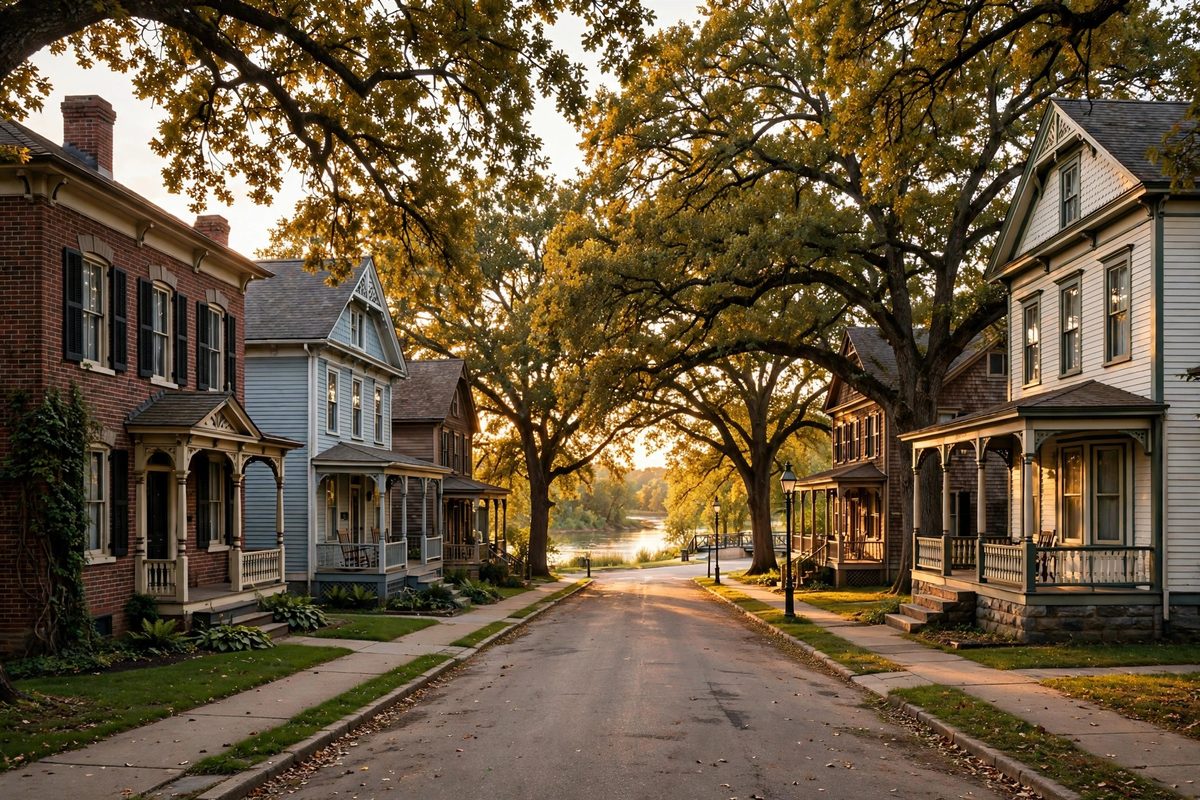
St. Charles has three local historic districts. The Central Historic District covers downtown and the original town, while the Moody-Millington and Millington districts sit on early additions, with houses dating from 1838 through the 1930s in styles from Greek Revival and Queen Anne to Craftsman and Prairie foursquare. Farther out, newer subdivisions have larger lots on curving streets and cul-de-sacs, and the former Pheasant Run Resort site on the east side, a 1960s convention landmark that closed in 2020 and was demolished, is one of the largest redevelopment sites in the western suburbs. Most of the city sits in Kane County with part in DuPage County, and the public schools run under Community Unit School District 303.
Local drain work in St. Charles tends to fall into three patterns:
- Historic-district laterals: Houses from 1838 through the 1930s run on vitrified clay laterals and cast iron stacks. Scale narrows cast iron from the inside, clay joints open to roots, and sections settle out of grade over a century of freeze-thaw. A line this old deserves a camera before any clearing, because the fix depends on what the pipe actually looks like.
- Downtown grease and shared stacks: Downtown is the city's only mixed-use area, with homes above the shops and a restaurant row along Main Street. Kitchen lines there carry grease from commercial cooking alongside residential waste, and the shared stacks in mixed-use buildings mean one clogged grease line can back up into the apartment above the shop.
- Riverfront water table: Pottawatomie Park, the Riverwalk and the paddlewheel boats all sit on the river, and the homes nearest the water sit over a high water table. Spring thaws and heavy storms push sump pumps and basement floor drains hard, and a partially clogged discharge lateral is what turns a wet spring into a flooded basement.
Available Drain & Sewer Services in St. Charles
Technicians dispatched to St. Charles arrive equipped for full-scope diagnostics and mechanical clearing:
- Toilet Drain Cleaning: Porcelain-safe closet augering for clogged toilets, foreign object extraction, and wax seal replacement.
- Main Sewer Lateral Snaking: 3/4-inch motorized continuous cable snaking through yard cleanouts to clear whole-house blockages.
- Commercial Hydro Jetting: 3,500 PSI high-pressure water scouring to strip grease and tree roots from sewer lines.
- HD Video Sewer Inspections: Real-time color camera scoping with digital depth locators to diagnose broken or sagging pipes.
Sewer Camera Inspection First in St. Charles
St. Charles is the city in this area where a camera inspection earns its keep most often. The combination is unusual: century-old clay laterals in the historic districts, grease-loaded kitchen lines downtown, and mature riverside trees whose roots reach every open joint. A cable clears a clog, but it cannot show whether the pipe behind the clog is bellied, cracked or full of scale, and on a line this old the difference decides whether the fix lasts a month or a decade. A camera run first, followed by hydro jetting where the pipe is sound and grease or roots are the problem, is the sequence that keeps St. Charles homeowners from paying for the same clearing twice. The lateral from the house to the main in the street is the homeowner's line to maintain, and the camera footage is the record that proves what it needs.
St. Charles homeowners are covered by the same dispatch described under drain cleaning in Elgin, south along the Fox River past South Elgin, at the north end of the Tri-Cities with Geneva and Batavia.