DRAIN MAINTENANCE GUIDE
How to Prevent Clogged Drains in Elgin, IL: Habits That Keep Fox Valley Pipes Clear
A clogged drain is almost always preventable, and the habits that prevent it cost nothing and take seconds. This guide covers the four things that actually block Elgin drains, grease, hair, mineral scale and tree roots, and the daily and seasonal habits that keep each one out of the pipes, plus a simple monthly routine that takes ten minutes.
Prevention & Maintenance
Why Elgin Drains Clog: Four Local Causes
Elgin drains clog for four reasons, and each one has its own fix. Grease from cooking coats the inside of kitchen lines and hardens as it cools. Hair and soap scum bind together in bathroom traps and shower drains. Mineral scale from hard water narrows older metal pipe a little every year. And tree roots find the joints of clay laterals in the older neighborhoods and grow into the line. Knowing which cause fits a home is the whole trick: a house with a new PVC lateral and a big maple in the front yard has a different risk from a 1920s home on a clay lateral with cast iron stacks.
The city's water is part of the story. Elgin draws its supply mainly from the Fox River and treats it at the Riverside plant, softening the raw river water from 15 to 24 grains per gallon down to about 7 to 8 grains at the tap. That is still hard water by the USGS scale, and it leaves scale in pipes, fixtures and water heaters. The towns around Elgin run harder still, but even at 7 to 8 grains, a home with old cast iron pipe will see its drains narrow over the years.
The Kitchen: Grease Is the Number One Enemy
Grease causes more kitchen clogs than everything else combined. Oil, bacon fat, butter and pan drippings are liquid when hot and solid at room temperature, so they coat the inside of the drain, catch food particles, and build up in layers. The fix is simple: wipe pans and plates with a paper towel before washing them, and keep a jar by the stove for used cooking oil. When the jar is full, throw it in the trash.
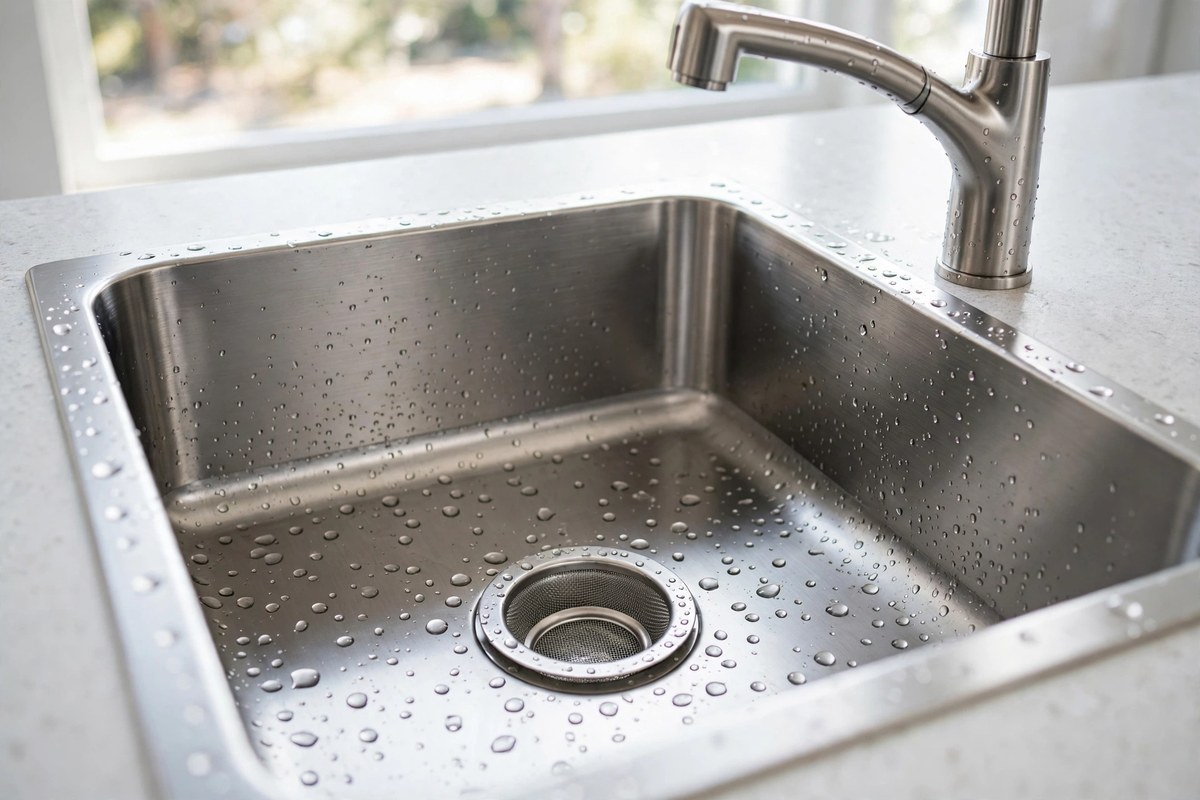
A mesh strainer in the sink catches the food that washing misses, and it costs a few dollars. Empty it into the trash after every meal, not down the disposal. A garbage disposal is not a trash can: run cold water before, during and after using it, feed food in small amounts, and never put grease, coffee grounds, pasta, rice, potato peels, celery or onion skins through it. Fibrous foods wrap around the disposal blades and jam the unit, and starchy foods swell and pack into the drain.
The dishwasher drains through the same kitchen line, so a slow kitchen sink often shows up first as a dishwasher that leaves standing water in the tub. If the sink is draining slowly, check the disposal and the strainer before assuming the dishwasher is at fault. A disposal that hums but does not spin is jammed, not clogged, and the reset button on the bottom of the unit is the first thing to try.
The Bathroom: Hair, Soap Scum and Scale
Hair is the main cause of bathroom clogs, and it starts at the stopper. A mesh strainer over a tub or shower drain catches most of it, and cleaning the pop-up stopper once a month takes two minutes: lift it out, pull off the hair and soap, and rinse it before putting it back. Homes with long hair in the household will see the difference within a week.
Soap scum is the glue that turns loose hair into a solid plug. Bar soap leaves more scum than liquid soap, and hard water makes the problem worse, because the calcium in Elgin's 7 to 8 grain water reacts with soap to form the sticky film that coats pipes. Switching to liquid soap and wiping the tub and sink with a cloth after use slows the buildup, and a monthly flush with very hot tap water helps keep the trap clear.
Watch the drains that are used least. A guest bathroom sink or a basement laundry tub that sits unused for weeks can dry out its trap, and a dry trap lets sewer gas into the room. Run water in every fixture for thirty seconds once a month, and the trap stays sealed. The same habit keeps the rubber seals and gaskets from drying out.
What Never Goes Down Any Drain
The toilet is the most abused drain in the house. Only toilet paper and human waste belong in it. So-called flushable wipes are the worst offender: they stay intact in water, snag on pipe joints, and collect into a mat that blocks the toilet and the main line. The same goes for cotton balls, dental floss, bandages and cat litter: the trash can is the only place for them.
The kitchen sink has its own list. Coffee grounds and eggshells settle at the bottom of the trap and pack into a dense plug that water cannot move. Paint, solvents and harsh chemicals belong at a household hazardous waste collection, not in a drain, and they can damage pipes and the city's treatment process. Medications should go back to a pharmacy take-back program.
The laundry drain deserves a mention too. Lint from the washer collects in the laundry tub and the floor drain, and a lint trap on the washer discharge hose catches most of it. Check it monthly, and keep the floor drain clear of the dust and debris that settle around it, or the first heavy rain will push that debris into the trap.
The Main Line: Roots, Settling and the Annual Check
The sewer lateral, the line from the house to the street main, is the homeowner's responsibility in Elgin, and it is where the expensive problems live. Tree roots are the main cause: the mature maples and oaks that shade the historic districts send fine roots into clay lateral joints looking for water, and those roots grow into a mat that catches everything else. A home with a large tree between the house and the street should have its lateral checked before the roots close it.
The other main line problem is settling. A lateral laid in fresh backfill can sag into a belly that holds water, and a bellied section collects grease and paper until it blocks. Settling shows up as a drain that clogs every few months no matter how often it is cleared, and the only way to confirm it is a camera inspection.
An annual camera inspection is the cheapest insurance a homeowner can buy for a main line. A camera scope in Elgin typically runs $195 – $350, and it shows roots, bellies, cracks and scale in one visit, with a video file to keep. If the line is clear, that is a year of peace of mind. If it is not, the fix can be scheduled on the homeowner's timetable instead of arriving as an emergency backup at midnight, when dispatch typically adds $75 – $150.
Seasonal Habits for Elgin Winters and Springs
Elgin winters are hard on drains. Pipes in unheated crawlspaces, garages and exterior walls can freeze, and a frozen pipe that bursts is a far bigger problem than a clog. Keep the heat on in every part of the house, even in rooms that are rarely used, and let a faucet drip on the coldest nights if a pipe has frozen before. Disconnect garden hoses before the first freeze, and shut off the exterior hose bibb from inside the house.
Spring thaw is the other season that matters. Snowmelt and heavy spring rain raise the water table along the Fox River, and basement floor drains and sump pumps work hardest in March and April. Test the sump pump before the thaw by pouring a bucket of water into the pit and watching it cycle, and keep the floor drain clear so it can do its job if the pump cannot keep up.
Fall brings leaves, and leaves belong in the yard waste bin, not in the outdoor drains. A leaf-clogged area drain or window well drain sends rainwater straight at the foundation, and the first freeze turns that standing water into ice. Clear the outdoor drains when the leaves fall, and the spring thaw will have somewhere to go.
A Simple Monthly Routine
Ten minutes a month keeps most Elgin drains clear. Clean the kitchen strainer and the bathroom stoppers, run very hot tap water through each sink for a minute, and run water in every fixture, including the guest bathroom and the laundry tub, for thirty seconds. Check the washer lint trap, look under the kitchen sink for dampness or a musty smell, and glance at the floor drain to make sure it is clear and holding water in the trap.
Once a year, add the bigger jobs: a camera inspection of the main lateral, a check of the water heater for scale, and a look at the trees near the lateral. If any drain has slowed even a little over the year, that is the time to have it cleared, while the cause is still small. A drain that slows a little each month is telling the homeowner something, and the cheapest time to listen is now.